




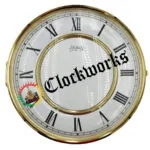

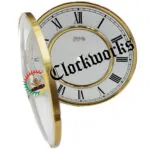
8 inch Bezel Glass Dial Roman with Hinge
$75.00
8 inch Bezel Glass Dial Roman with Hinge
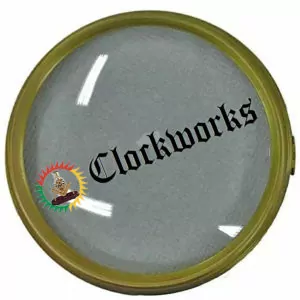
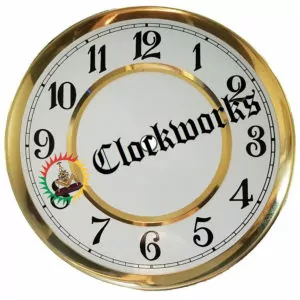
Clock dial and bezel with convex glass. The bezel and glass are held onto the dial pan by a hinge. German made.
$75.00
SKU: BZcompR-1-1
Categories: All Products, All Clock Parts, Clock Dials, Clock Dials and Bezels
Ships From: USA
Sold By: Clockworks Inc.
Returns: 30-day return policy
Secure Payment: Shop with confidence
The Timeless Appeal of the Hinge Dial with Roman Numerals
Clockmaking blends art, craftsmanship, and engineering. Among the many components of a clock, the face is perhaps the most visually striking, as it serves both functional and aesthetic purposes. One iconic design that has stood the test of time is the hinge dial with Roman numerals.
This design combines elegance and practicality, making it a favorite among horologists and clock enthusiasts alike. In this article, we’ll explore the intricate details of the hinge dial, examining its components, functionality, and enduring charm.
The Anatomy of a Hinge Dial Clock Face
A hinge dial clock face comprises several integral components, each serving a unique purpose. These include the bezel, glass, dial, and hinge. Together, they create a harmonious design that is both functional and visually appealing.
1. The Bezel: Form Meets Function
The bezel is a protective ring encircling the clock face, often crafted from brass or other durable metals. It serves multiple purposes:
- Protection: The bezel shields the delicate clock face and its internal mechanisms from external damage.
- Decoration: Its polished finish and intricate designs add a touch of elegance to the clock, enhancing its overall aesthetic appeal.
- Support: The bezel holds the glass cover in place, ensuring alignment and stability.
Thus, the bezel not only acts as a barrier against dust and debris but also elevates the clock’s design, making it an essential component of traditional and modern clocks alike.
2. The Glass: A Clear View
The glass cover, typically convex in shape, serves as the clock’s transparent shield. It plays a vital role in protecting the dial while offering additional benefits:
- Magnification: The convex shape slightly enlarges the hands and numerals, making the clock easier to read from a distance.
- Durability: Treated glass resists scratches and maintains its clarity, ensuring the clock face remains pristine over time.
Moreover, the glass enhances the readability of the clock and adds an extra layer of sophistication to its design.
3. The Dial: The Heart of Timekeeping
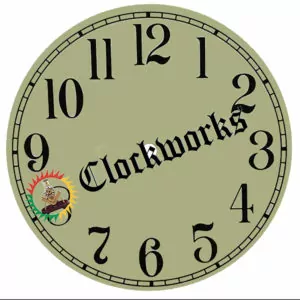
At the center of the clock face lies the dial, the most crucial element for tracking time. The dial is a flat, circular disc that displays the hour, minute, and sometimes second markers. In hinge dial clocks, Roman numerals typically create an air of timeless elegance.
Key features of the dial include:
- Numerals: Roman numerals deliver a classic and refined look, evoking a sense of history and tradition.
- Markings: Precise minute and hour markers ensure accurate time reading.
- Design: The dial often features artistic details, such as intricate patterns or subtle textures, further enhancing its beauty.
Therefore, the dial functions as the clock’s visual centerpiece, blending functionality with artistry.
4. The Hinge: Convenient Accessibility
A distinguishing feature of hinge dial clocks is the hinge mechanism that connects the bezel and glass to the rest of the clock. This metal joint allows the bezel and glass to swing open, providing easy access to the clock’s interior. The hinge offers several practical advantages:
- Ease of Maintenance: Users can clean the glass, adjust the hands, or wind the clock without disassembling the face.
- Durability: Built from robust materials, the hinge ensures a secure connection while enabling smooth operation.
As a result, this feature simplifies clock maintenance and enhances its usability, making hinge dial clocks a practical choice for decorative and functional purposes.
The Practicality of Hinge Dial Clocks
Hinge dial clocks are not just about aesthetics—they are designed with practicality in mind. The combination of a hinged bezel, convex glass, and Roman numeral dial offers several benefits:
- Easy Maintenance: The hinged bezel streamlines the process of cleaning, winding, and setting the clock. Users can access the clock’s mechanisms without disassembling it, reducing the risk of damage.
- Durable Design: Each component, from the brass bezel to the glass and metal hinge, withstands daily wear and tear, ensuring the clock remains functional for years.
- Enhanced Readability: The convex glass and bold Roman numerals make the clock easy to read, even from a distance, catering to both practicality and style.
In summary, these features make hinge dial clocks an excellent choice for those seeking both beauty and functionality.
Aesthetic and Historical Significance
Hinge dial clocks with Roman numerals carry a rich history and tradition. The use of Roman numerals dates back to ancient times, symbolizing a connection to classical antiquity.
These numerals, combined with the craftsmanship of a hinge dial, create a design that exudes sophistication and timelessness. The aesthetic appeal of hinge dial clocks makes them a popular choice for various settings, including:
- Homes: They add a touch of elegance to living rooms, studies, and bedrooms.
- Offices: Their classic design lends a professional and refined ambiance to workplaces.
- Public Spaces: Hinge dial clocks often feature prominently in train stations, libraries, and museums, where their readability and historical charm are highly valued.
Consequently, collectors and casual admirers continue to cherish these clocks.
Modern Applications of Hinge Dial Clocks
While hinge dial clocks are deeply rooted in tradition, they remain relevant in modern times. Advances in clockmaking have introduced innovations in materials and mechanisms, making these clocks more versatile than ever.
Some modern applications include:
- Restorations: Clockmakers restore vintage hinge dial clocks to their original condition, preserving their historical value.
- Custom Designs: Contemporary clockmakers create custom hinge dial designs, blending traditional elements with modern aesthetics.
- Smart Features: In some cases, hinge dial designs integrate into smart clocks, combining classic style with modern technology.
Therefore, these adaptations ensure that hinge dial clocks remain a vital part of modern horology.
The Enduring Legacy of Hinge Dial Clocks
The hinge dial clock face, with its combination of bezel, glass, Roman numeral dial, and hinge mechanism, represents a perfect blend of form and function. Its enduring popularity reflects its timeless design, practicality, and historical significance.
Whether displayed in a cozy home, an elegant office, or a bustling public space, hinge dial clocks captivate with their charm and functionality. They showcase the artistry and precision that define exceptional timepieces, celebrating the age-old tradition of clockmaking.
In conclusion, in a world increasingly dominated by digital technology, hinge dial clocks stand as a testament to the beauty of analog craftsmanship.
They encourage us to pause, appreciate the passage of time, and marvel at the intricate details that make these timepieces truly exceptional.
| Weight | 0.3 lbs |
|---|---|
| Diameter |
6 inch (152mm) ,8 inch (203mm) |
Related Articles
You may also like…
Bezel Glass Clock Dial Friction Fit
Clock Brass Bezel With Convex Glass

How do you sell clocks without putting dimentions on the website?
In the dial product pages, the sizes are in the options, just select what is needed upon check out
James Stoudenmire
40yr Clockmaker
Author of Clockworks.com