


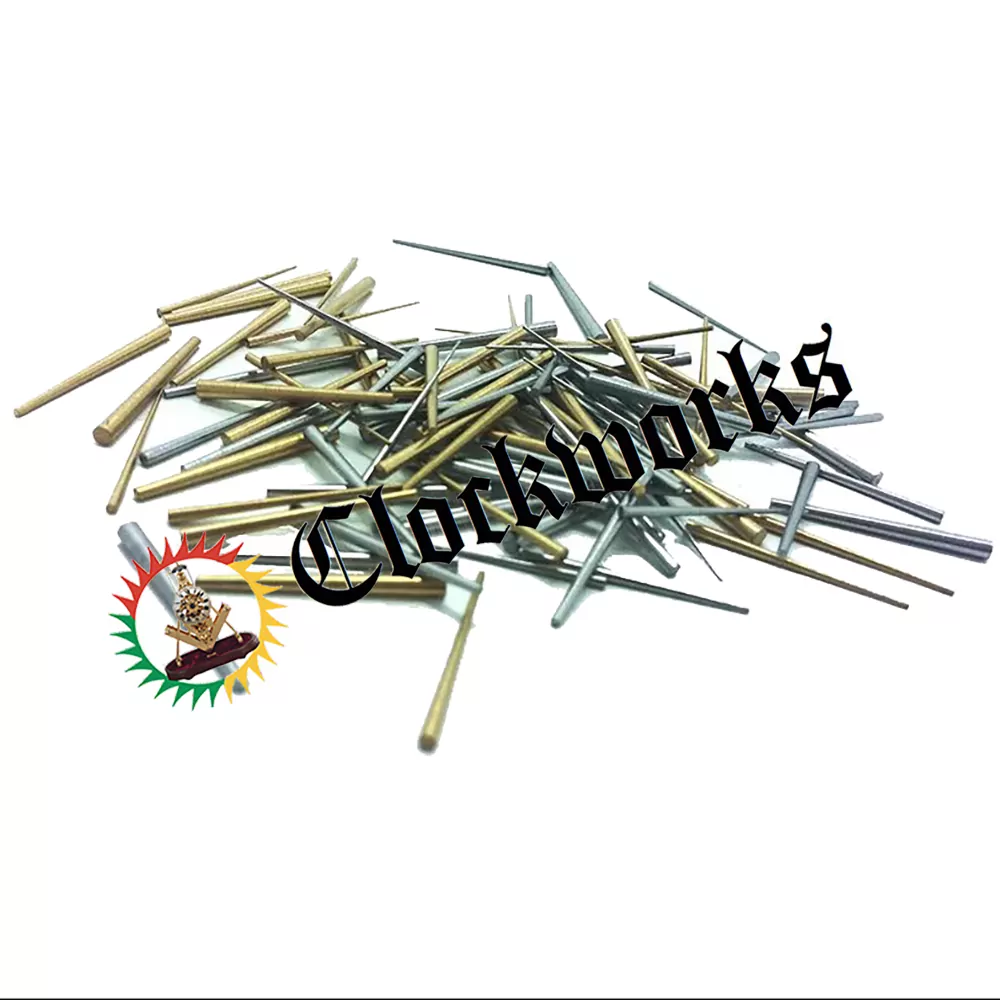
Clock Repair Tapered Pins
$20.00
Clock Repair Tapered Pins
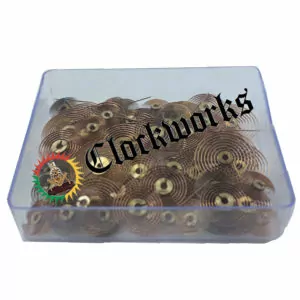
Used in clock repair these tapered pins come in an assortment of 50 sizes and diameters. These Clock Parts have many uses in clock repair. For example, they attach some dials, movement plates, suspensions and sometimes hands on the clock.
$20.00
SKU: CP2
Categories: All Products, All Clock Parts, Hardware for Clocks
Ships From: USA
Sold By: Clockworks Inc.
Returns: 30-day return policy
Secure Payment: Shop with confidence
Mechanical Clock Movement Identification – Rather then repairing it sometimes just makes more sense to replace. Save time and money on repairs.
Mechanical clock parts information and important facts to know. Additionally, it is not always easy to get parts for an antique clock. Many of the parts are now obsolete and the older the clock the harder things are to find.
Subsequently, it is not uncommon to need a part custom made. If that’s the case, we may be able to help. Please email pictures of the movement to us here at Clockworks.
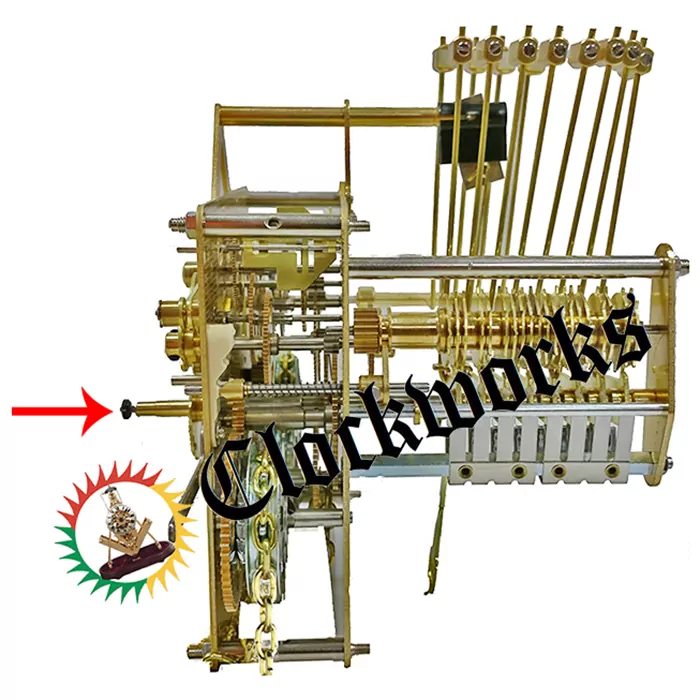
Mechanical clock hand nuts
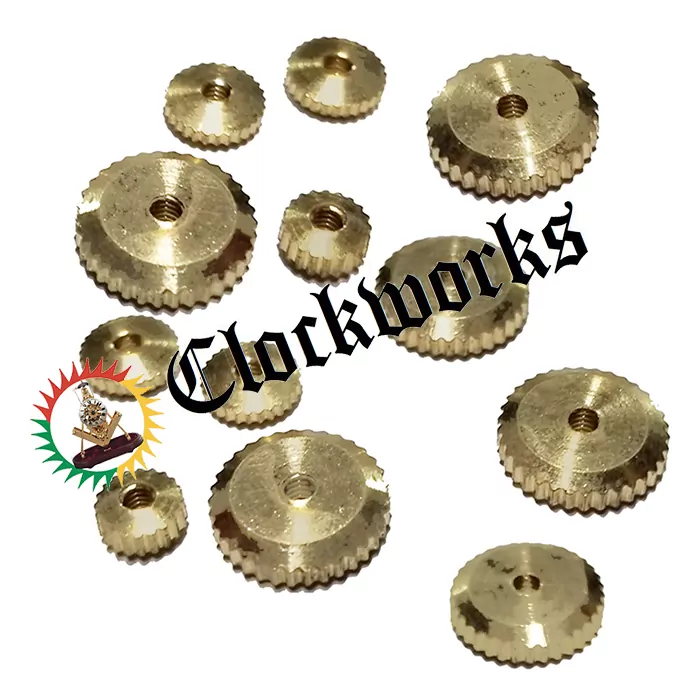
One of the most common parts a Mechanical clock needs is the hand nut. As we said before, the older the clock the harder things are to find. So, the hand nuts Clockworks offer are for movements made after the 1930’s.
Prior to 1930 clock hand nuts
There were not many standards on what the hand nut size should be on the early clocks. However, prior to around 1930 there is no telling what will work. In other words, it is literally trial and error. There was no standard hand nut size.
Subsequently, any hand nut we offer, may, or may not, work. This includes cuckoo hand nuts, American clock hand nuts, or German hand nuts. However, with even all of these assortments, there is a chance none of them will work on the clock.
Post 1930 clock hand nuts
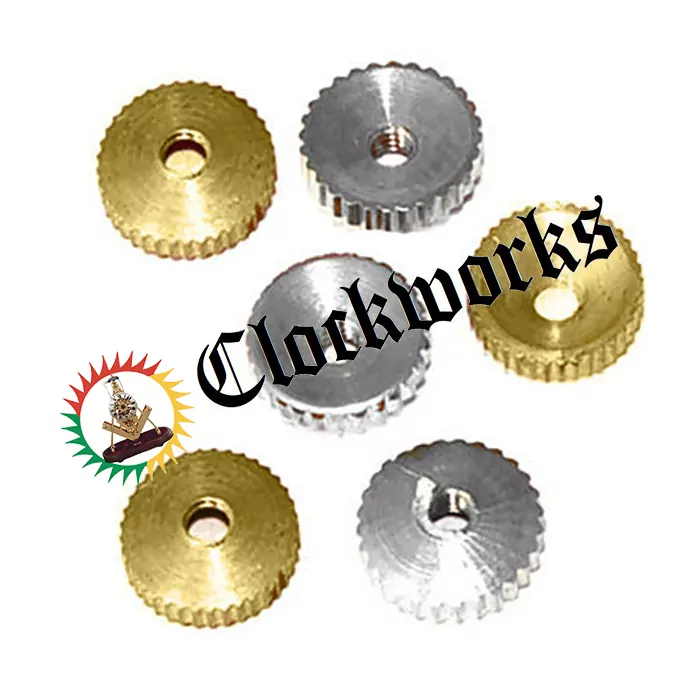
Generally speaking, what we have to offer in the three types of clock hand nuts will cover most of the post 1930 Mechanical clocks.
The cuckoo hand nuts fit about 80% of the post war German made cuckoo clocks.
So, the American clock hand nuts fit many of the mechanical time strikes that were so popular. German hand nuts fit most post war German made mechanical clocks, with the exception being a few large grandfather clocks.
Clocks that do not take a hand nut
However, not all clocks require a hand nut. Some antique mechanical clocks require a clock hand washer and a tapered pin instead. These secure the minute hand as an alternative to the hand nut.
The washer may have a small square hole, or large, oblong or round hole. Clockworks offers an assortment of 100 clock hand washers that includes all the styles above. Use a taper pin to secure the hand with the washer on top of it.
Insert the taper pin into the hole in the end of the minute hand arbor to secure the washer and minute hand to the clock. A taper pin is a small brass or steel rod that is wide on one end and skinny on the other. Clockworks offers them in an assortment of 100 to ensure the right one is there.

Clicks and Click Springs
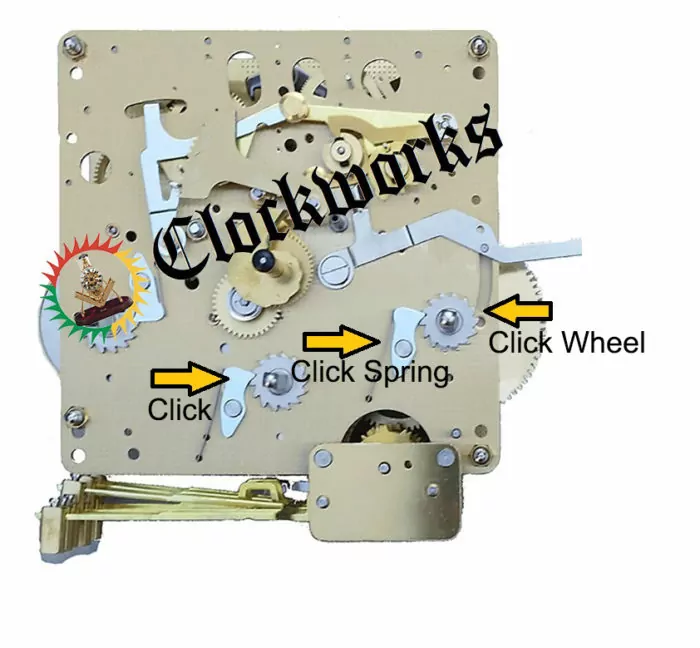
Mechanical clocks with a ratchet wheel use clicks. This can mean a spring driven clock or a weight driven clock.
Clicks keep it wound in only one direction. Both have a ratcheting function as in a wheel being able to turn one way only. It spins one way and makes a clicking sound when this is done. That clicking sound is the click. This is the small part that makes the wheel turn in only one direction.
The click is held in the down position with some pressure from what is known as a click spring.
Clicks on spring driven movements
Often when a mainspring breaks the click will loosen considerably from the shock.
Replace or tighten the loose click to ensure it will not let go when winding the clock with the key.
It is not uncommon to think the mainspring broke when really the click eventually came loose and let the mainspring slip. Once the click on the ratchet slips the mainspring lets loose and momentum of it unwinding is unstoppable.
Clicks on weight driven movements
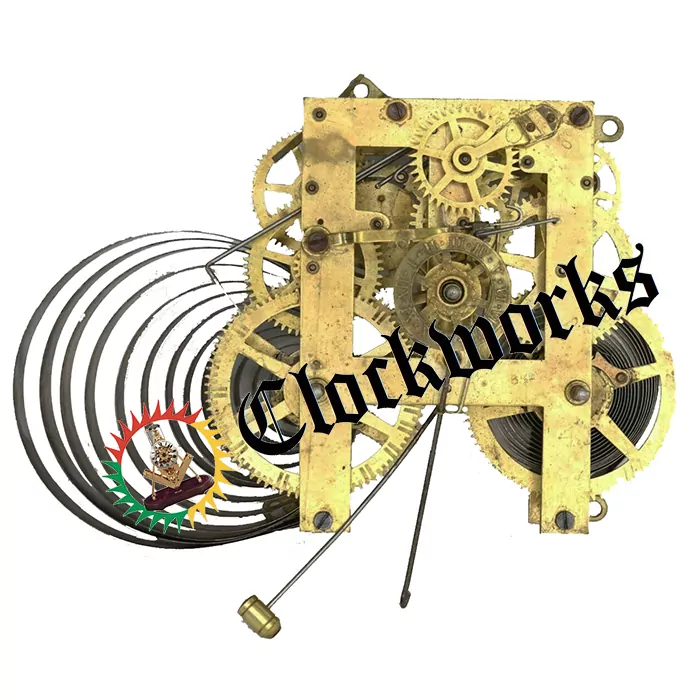
In general, this is a harder style to replace and not really available on the market. If you need these for a weight driven ratchet wheel it is best to replace the entire wheel. Replacing the entire wheel will include the ratchet wheel, the arbor it is on and also the gear.
It will have the click and spring on it all as one unit. This maybe the ratchet wheel on a chain driven clock or a cable drum for a cable driven clock. In both situations it is best to replace the entire component with the click and spring together. That way is it complete and done the best and quickest way.
Tapers
Use these for clock repair. So these come in an assortment of 50 sizes and diameters. These Clock Parts have many uses in clock repair. For example, they attach some dials, movement plates, suspensions and sometimes hands on the clock. A taper pin is a small steel or brass rod that is wide on one end and skinny on the other.
| Weight | 0.25 lbs |
|---|---|
| Dimensions | 0.25 × 1 × 1 in |
Related Articles
You may also like…
Clock Movement Seat-Board Screws


Are these brass tapered clock pins small enough to hold the hands on my French mantel clock with a mercury pendulum built in 1889?
Yes
James Stoudenmire
40yr Clockmaker
Author of Clockworks.com
I need a tapered pin to secure the hands of my Seth Thomas Orchard No. 6. It’s as thin as a sewing needle.
This link
https://www.clockworks.com/product/clock-repair-tapered-pins
James Stoudenmire
40yr Clockmaker
Author of Clockworks.com
I have a 1973 New England wall clock. The extension spring (I believe it’s called) has a small hole at the top which lines up with a hole in the movement, but don’t have anything to attach through the hole. We temporarily put a toothpick in there but the pendulum wouldn’t swing for very long. How do we fasten this?
Tapered pins work the best. A pin that is wide on one side and skinny on the other, like this =
https://www.clockworks.com/product/clock-repair-tapered-pins
James Stoudenmire
40yr Clockmaker
Author of Clockworks.com
Have a grandfather clock on the back plate a few numbers PL. 98 S. 66 2/3 14417 made in Germany have broken suspenion spring and the pin that holds it is not tappered but bent on both ends to hold can you help Thank you . Norm
Tapered or bent does not matter as long as the spring is in the air.
Suspension A3 this link is what would be needed for that one
https://www.clockworks.com/product/mechanical-clock-suspension-spring
James Stoudenmire
40yr Clockmaker
Author of Clockworks.com
Thank you.
I have a mantel clock that was made in Connecticut in the 1830s. The door in the front has lost a pin (that holds the door on like a hinge) so it can’t be used. What do I order to fix this? Thank you.
Do not have this part, falls into cabinet maker supply instead of clock component supply
James Stoudenmire
30yr Clockmaker
Author of Clockworks.com
Thank you.
Where on your website can I find the washers that go on top of the hands before the taper pin?
Clock hand washers
https://www.clockworks.com/product/clock-hand-washer-assortment
James Stoudenmire
30yr Clockmaker
Author of Clockworks.com
Hi, I was wondering when clock pins were first created and used! If you have an answer, that would be great.
A very long time ago since the dawn of keeping time. Faded out as we went into 1900s with screws as an alternative to keeping the plates held together.
James Stoudenmire
30yr Clockmaker
Author of Clockworks.com
Very interesting, thank you!
Perfect, thanks.
Iam glad it worked out. Great Job !
James Stoudenmire
30yr Clockmaker
Author of Clockworks.com
what sizes in mils do these range from?
The Small tapered pin assortment contains pins ranging from 0.32mm up to 1.42mm. These are approximate measurements. The larger 100 pin assortment ranges from 0.70mm up to 2.4mm. –Bob
Thank you !
Will I be able to find 4 pins in this selection that will attach the face on my Bim Bam clock to the works?
John Stuckey
Yes these are the pins needed to hold a dial in place or hands on a mechanical clock, sometimes the movement plate pillars also
James Stoudenmire
30yr Clockmaker
Author of Clockworks.com
Can you ask Bob what size pin assortment I need to order for the Bim Bmm clock you just sent me?
When I aksed the original question I didn’t realize that were were two sizes. He might be able to find the original pins around his workbench. Is so, please send them. The small pin that fell out of the works is not big enough for the clock face posts.
Thank you,
John Stuckey
I will send out some taper pins in the AM
James Stoudenmire
30yr Clockmaker
Author of Clockworks.com