


Blog

What’s the Difference Between a Triple Chime and Westminster Clock Kit?


How Do Triple Chime and Westminster Clock Kits Compare?
If you’re repairing or replacing a chiming clock movement, you’ll need to choose between a Westminster or a Triple Chime movement. These two movement types represent some of the most common chime configurations in mechanical clocks. While they may appear similar on the surface, they function differently and serve different preferences in tone, musical variety, and case compatibility.
Let’s take a close look at the real differences between Westminster and Triple Chime movements, how each one sounds, and which application suits them best.
What Is a Westminster Movement?
A Westminster movement plays only the classic Westminster melody—the same tune heard from London’s Big Ben tower. It plays in segments on the quarter hours and completes the full melody on the hour, followed by striking the hour count on a separate set of chime hammers.
This movement works best in traditional grandfather clocks, wall clocks, or mantel clocks where space and simplicity are priorities. Because it plays only one chime, it appeals to clock owners who want that one iconic melody, especially those restoring vintage clocks that originally used it.
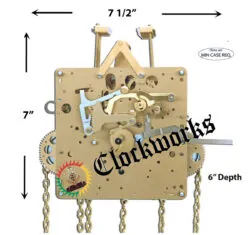
The Hermle 451-050 is a reliable mechanical Westminster movement with an 8-day wind, chain or cable-driven power, and three weights. It strikes the hour after playing the chime and uses a set of hammers to strike chime rods mounted inside the clock case.
You can find Westminster movements here: Hermle 451-050 Westminster Mechanical Movement
What Is a Triple Chime Movement?
A Triple Chime movement offers three distinct melodies: Westminster, Whittington, and St. Michael. These movements allow the user to select the chime of their choice using a lever on the side of the movement. All melodies play on the quarter hours and strike the full melody on the hour before sounding the hour count.
Triple Chime movements offer flexibility for users who want a more personalized or seasonal sound. Many customers enjoy using Westminster most of the year, then switching to Whittington or St. Michael during holidays or special occasions. Some just enjoy having more variety than the standard Westminster melody can provide.
The Hermle 1161-853 is a premier mechanical Triple Chime movement with an 8-day wind, cable-driven power, and three weights. It fits tall case clocks with a moon dial and includes automatic night shutoff and chime selection.
You can find Triple Chime movements here: Hermle 1161-853 Triple Chime Mechanical Movement
How the Chimes Differ
The Westminster melody has a familiar, regal tone. It uses a progression of 16 notes to create a calm and stately feeling throughout the hour. People recognize it instantly and associate it with heritage and formality.
Whittington, one of the melodies included in Triple Chime units, has a rolling and lyrical quality. It creates a softer, more flowing experience. It fits well in open rooms with natural acoustics and has become a favorite among those who want a melody that’s slightly more whimsical.
St. Michael, the third option in Triple Chime movements, features a deeper, more dramatic tone. It commands attention and offers a bold alternative to the other two. Many owners use this melody in colder months or special events due to its rich and festive sound.
Westminster-only movements do not provide a melody selection option. You install it, set the beat, and let it run with the one timeless chime it was built to play.
Movement Features and Compatibility
Both Westminster and Triple Chime mechanical movements operate with weights and pendulums. However, there are several differences in terms of features and case fit:
| Feature | Westminster (Hermle 451-050) | Triple Chime (Hermle 1161-853) |
|---|---|---|
| Melodies | Westminster only | Westminster, Whittington, St. Michael |
| Power Type | Chain driven | Cable-driven |
| Night Silence | Manual | Automatic night shutoff option |
| Chime Selection | None | Lever-based chime selection |
If your clock has a moon phase dial or more chime rods in the back panel, the Triple Chime option is likely the better match. The Westminster movement fits better in more compact clock cases that require fewer rods and simpler mechanisms.
Installation Considerations
When selecting between these two mechanical movements, always check:
-
Hand shaft length
-
Pendulum length
-
Weight configuration (chain or cable)
-
Chime rod setup and space inside the case
Which One Should You Choose?
Choose Westminster if:
-
You prefer a single, recognizable melody
-
Your case has limited space for movement height or chime rods
Choose Triple Chime if:
-
You want seasonal or musical variety
-
Your clock case includes a moon dial
-
You enjoy adjusting the sound based on mood or time of year
Triple Chime movements provide a richer musical experience and are ideal for collectors and owners of tall, decorative grandfather clocks. Westminster movements remain the go-to choice for traditionalists who want the elegance of a historic melody without the need for selection levers or additional rod arrays.
Final Thoughts
Deciding between a Westminster and Triple Chime mechanical clock movement comes down to personal preference, case dimensions, and how much musical variety you want. Both offer timeless craftsmanship and rich sound, but each is designed to suit different styles and experiences.
If you’re unsure which movement fits your clock or matches your taste, our specialists are ready to help. Visit Clockworks.com or email us at [email protected] for expert guidance.
My clock has two tunes, Cambridge chimes, and chime on eight bells
That is a nice clock, a valuable one also.
James Stoudenmire
40yr Clockmaker
Author of Clockworks.com